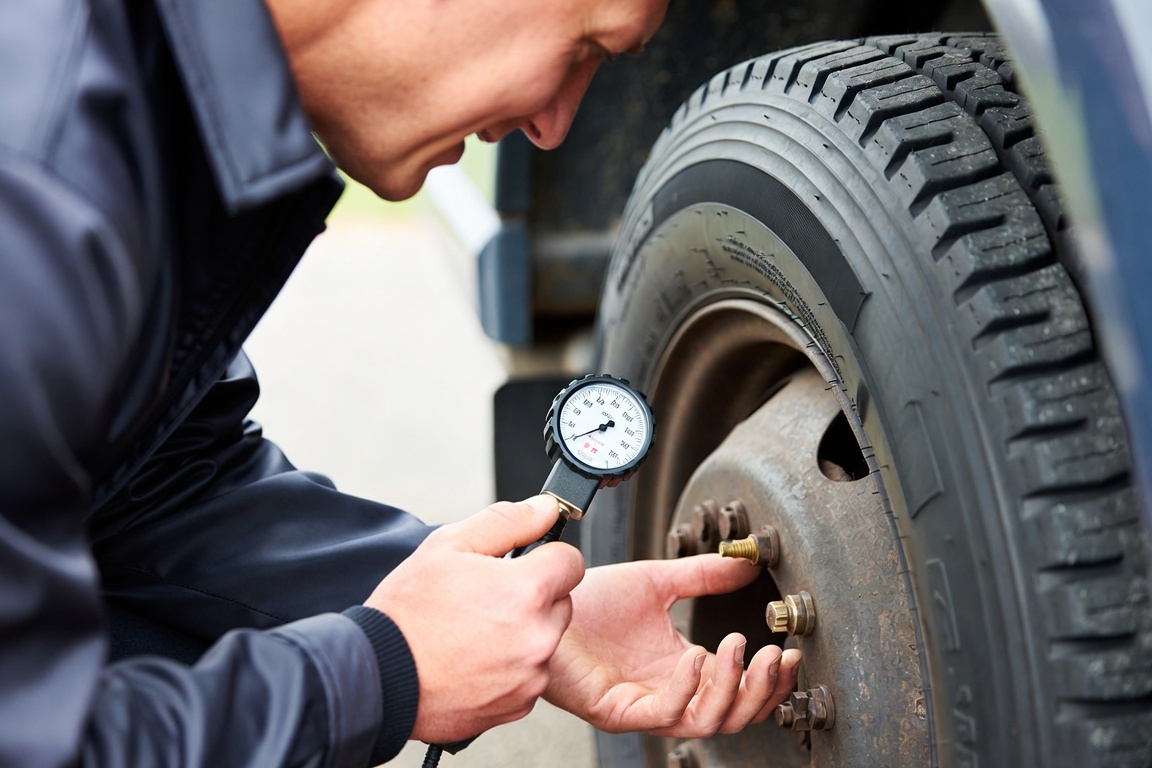
Tire problems are one of the most common reasons trucks get put out of service and one of the most expensive roadside failures a driver can face. A blowout doesn’t just cost a tire — it can mean downtime, towing, cargo delays, and safety risk. The good news is that most of these failures are preventable with simple, consistent checks.
Here’s what actually works for drivers who want to protect their tires and their wallet.
1. Check Pressure When Tires Are Cold
This is the single most important habit. Underinflation is the leading preventable cause of tire failure. When a tire runs low, the sidewalls flex more, heat builds up, and the tire can fail — sometimes suddenly.
Always check pressure before the truck has been driven (or after it has sat long enough to cool). Driving heats the tires and raises the pressure, which can hide a problem. Use a quality gauge, not a “thumper” or kick test.
Know the correct pressure for your load and tire position. Many Class 8 steer tires run in the 110–120 psi range when loaded, while drive and trailer tires are often a bit lower, but always follow the tire manufacturer’s recommendations and the load being carried. Federal rules require that cold inflation pressure not be less than the pressure specified for the load.
Tires naturally lose 1–2 psi per month. Checking regularly catches slow leaks before they become dangerous.
2. Do a Quick Visual Walk-Around
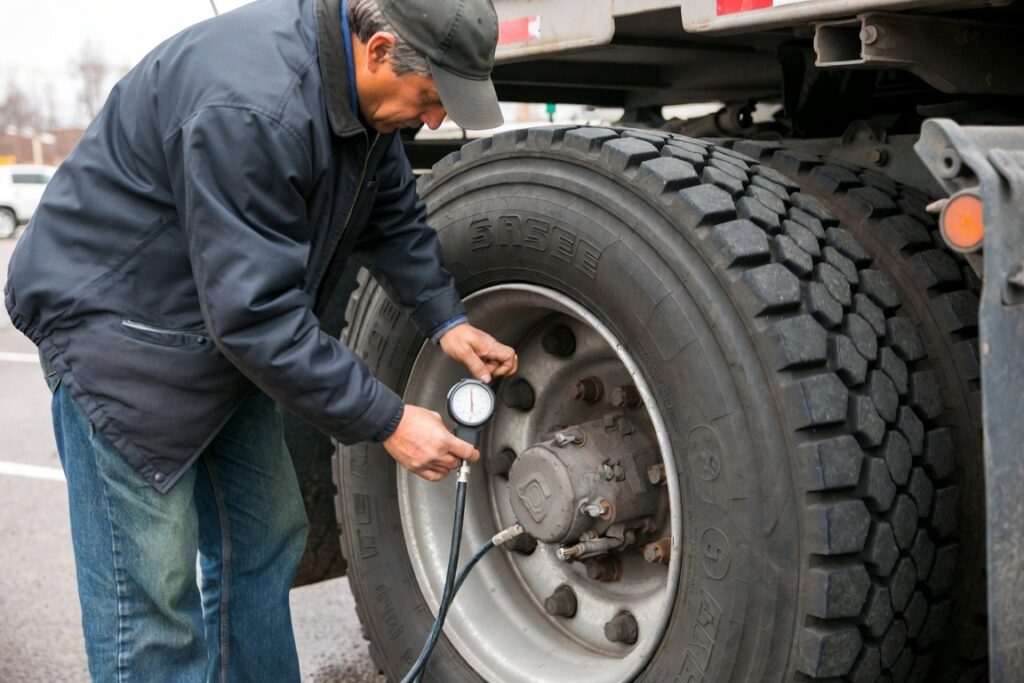
Before every trip, look at every tire:
- Cuts, cracks, or bulges in the sidewall
- Objects stuck in the tread (nails, screws, metal)
- Uneven wear patterns
- Sidewall damage or exposed cord
- Dual tires that look mismatched in size or condition
Federal regulations prohibit operating on tires with exposed body ply or belt material, tread or sidewall separation, flat tires or audible leaks, or cuts that expose the ply or belt.
Catching a nail or a developing bulge at the terminal is far cheaper than dealing with it on the shoulder of the interstate.
3. Monitor Tread Depth
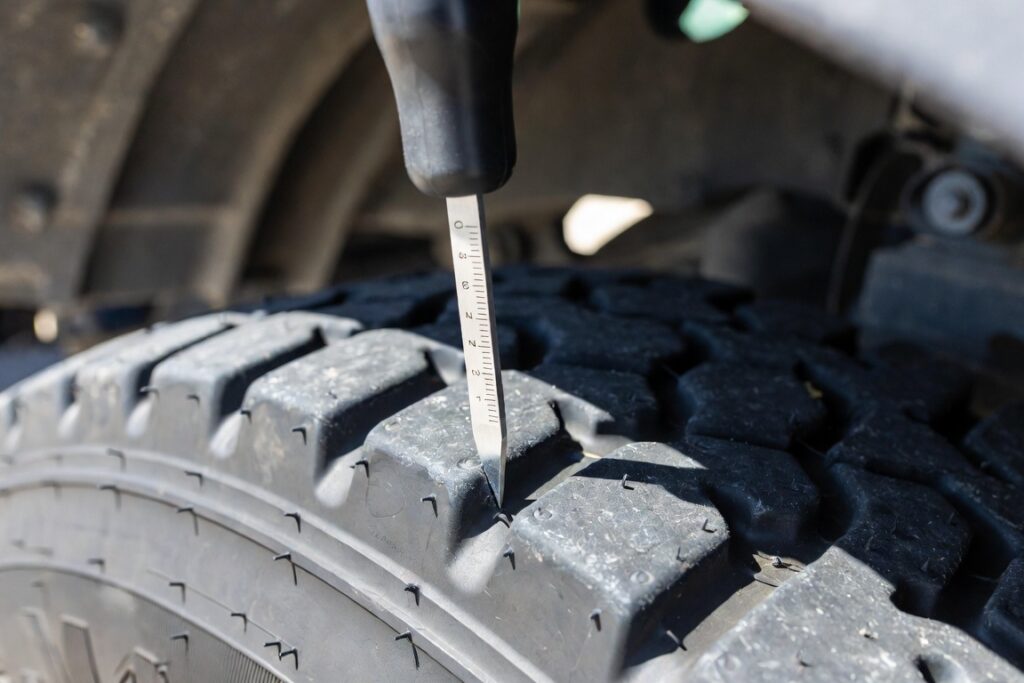
FMCSA rules set minimum tread depths:
- Steer tires: at least 4/32 inch
- Drive and trailer tires: at least 2/32 inch
Many experienced drivers and fleets pull tires earlier (especially steers) to maintain better wet traction and keep casings in better condition for retreading. Use a simple tread depth gauge — it takes seconds per tire.
Look for uneven wear. Center wear often points to overinflation. Shoulder wear can signal underinflation. One-sided wear may indicate alignment or suspension issues.
4. Keep Duals Matched and Even
On dual assemblies, both tires should be the same size, similar tread depth, and close in pressure. A significant pressure difference makes one tire carry more load and work harder, accelerating wear and raising failure risk on the overloaded tire.
5. Don’t Ignore Temperature and Load Changes
Pressure changes with temperature (roughly 1 psi for every 10°F change). A tire that was fine in the morning can be low after a cold night. Heavy loads require proper inflation for the weight being carried — underinflation under load generates heat quickly.
Why These Checks Save Money
Proper inflation reduces rolling resistance, which improves fuel economy. Industry data consistently shows that running tires 10 psi low can increase fuel use by roughly 0.5–1% or more and noticeably shorten tire life. Premature tire replacement and emergency roadside service are far more expensive than a few minutes with a gauge each day.
Blowouts and out-of-service tire violations also cost time — and time is money on the road.
Simple Daily Routine That Works
- Check cold pressures with a good gauge (all positions, including trailer).
- Walk around and look for damage, objects, and uneven wear.
- Quickly check tread on steers and any tires that look worn.
- Note anything that needs attention before it becomes a roadside problem.
It doesn’t take long. Drivers who treat tires as a daily priority instead of an afterthought have fewer blowouts, better fuel numbers, and lower tire costs over the year.
Leave a Reply