Self-driving trucks have moved beyond experimental prototypes. Autonomous vehicles are already carrying commercial freight on selected routes, and developers are working to expand their operations. This progress has created an understandable question for professional drivers: will autonomous trucks eventually take their jobs?
The short answer is that automation will change trucking, but it is unlikely to eliminate truck drivers in the near future. The earliest driverless systems are designed for specific routes and operating conditions. They cannot yet perform every task completed by an experienced driver.
Automation may reduce demand for certain types of highway driving while creating new local, technical, and supervisory positions. The effect will not be the same across every segment of the industry.
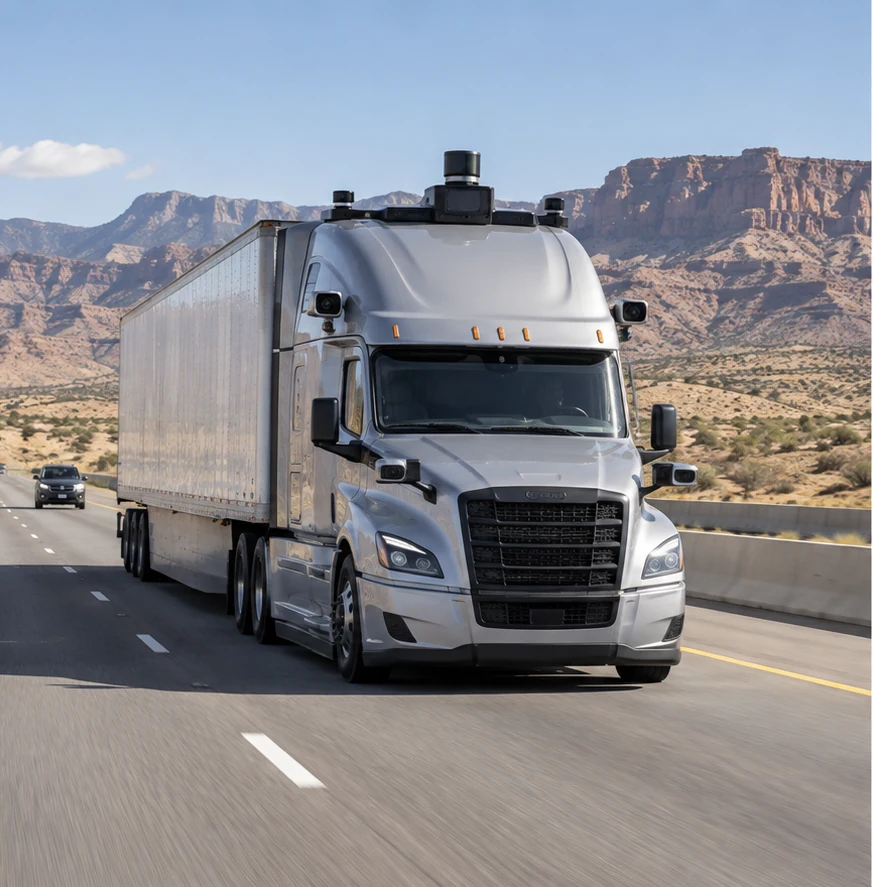
What Is a Self-Driving Truck?
The term “self-driving” covers several levels of technology. Some systems only assist with steering, braking, or maintaining distance. These features still require a driver to monitor the road and remain responsible for the vehicle.
Higher-level automated driving systems can control the truck without continuous human supervision, but only within an approved operating environment. This environment is known as an operational design domain. It may be limited by mapped routes, road type, weather, time of day, traffic conditions, or geographic area.
The [National Highway Traffic Safety Administration](https://www.nhtsa.gov/vehicle-safety/automated-vehicles-safety) distinguishes driver-assistance features from automated driving systems. A truck with adaptive cruise control and lane-centering technology is not necessarily a driverless truck.
Fully autonomous operation in every location and under every possible condition is considerably more difficult than operating on a repeatable highway route.
Driverless Trucks Are Already Working
Autonomous trucking is no longer only a future concept. Several companies have begun commercial or industrial operations without drivers inside their vehicles.
Aurora operates autonomous freight technology intended for commercial highway transportation. Its [Aurora Driver platform](https://aurora.tech/) combines cameras, radar, lidar, onboard computers, and driving software.
Kodiak has deployed driverless trucks in industrial operations. According to its [second-quarter 2026 results](https://investors.kodiak.ai/news-releases/news-release-details/kodiak-ai-reports-second-quarter-2026-results-and-advances), customer-owned autonomous trucks had completed tens of thousands of paid operating hours by mid-2026. The company has also demonstrated highway operations in additional states.
Other developers remain in testing and preparation. In February 2026, [Torc Robotics announced](https://torc.ai/michigan-public-roads-autonomous-truck-testing/) that it was expanding autonomous-truck testing to Michigan roads to evaluate its technology in new environments and seasonal conditions.
These developments are significant, but the operating fleets remain small compared with the millions of conventional commercial vehicles and professional drivers working across the United States.
Long-Haul Highway Routes May Change First
Autonomous technology is best suited to predictable operating conditions. For that reason, long highway segments between freight hubs are among the most likely areas for early adoption.
A driverless tractor might transport a trailer between two terminals located near major highways. Human drivers could then handle pickup and delivery within cities. This is commonly described as a hub-to-hub model.
Highway driving offers fewer intersections, pedestrians, cyclists, loading docks, and tight turns than urban delivery. Routes can also be mapped and studied repeatedly. This makes the environment easier for an automated system to manage.
Drivers whose work consists primarily of repeatable highway miles may experience the greatest long-term pressure. However, autonomous trucks will still require terminals, maintenance, inspections, fueling or charging, trailer handling, dispatch support, and emergency-response procedures.
Why Human Drivers Are Still Needed
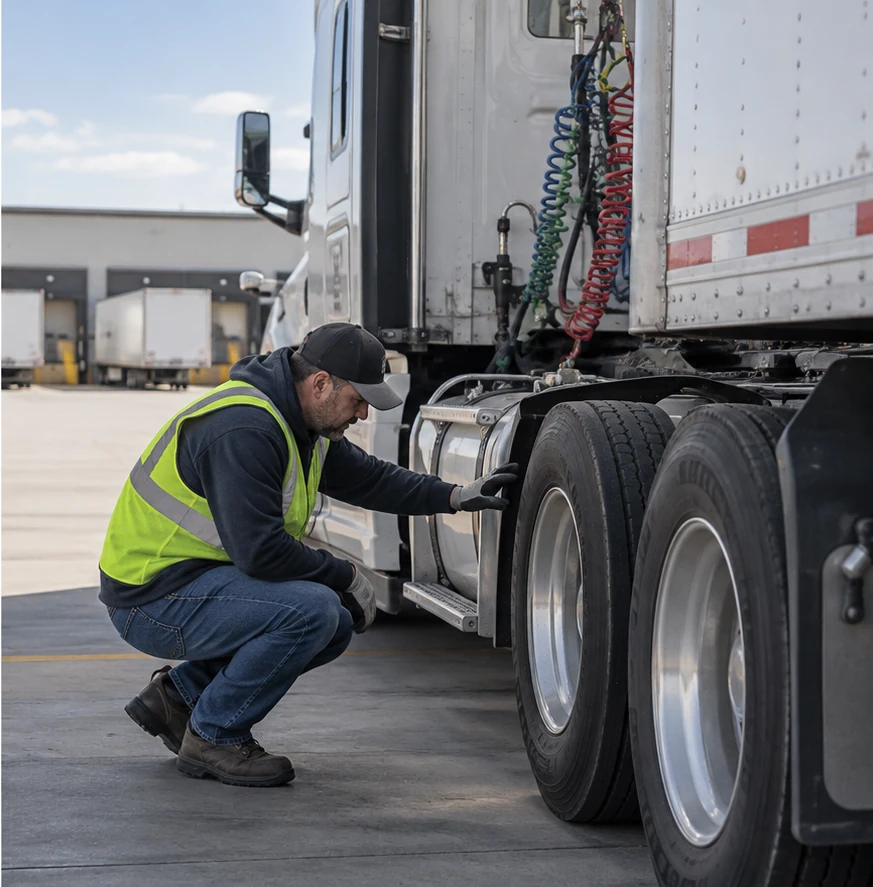
Driving is only part of a truck driver’s job. Professional drivers inspect equipment, secure cargo, connect trailers, monitor freight, communicate with customers, handle paperwork, respond to mechanical problems, and make decisions when plans change.
According to [O*NET OnLine](https://www.onetonline.org/link/summary/53-3032.00), heavy truck drivers perform tasks that include inspecting vehicles, checking cargo, planning routes, maintaining records, and communicating with dispatchers and customers.
Autonomous software may control the truck on a highway, but it cannot easily repair an air leak, examine a damaged tire, adjust cargo securement, negotiate access to an overcrowded receiving area, or speak with a customer about a rejected delivery.
Weather creates another challenge. Heavy snow, fog, flooding, road construction, emergency scenes, and damaged lane markings can make automated operation more difficult. A system may be designed to stop safely when it reaches the limits of its capability, but someone must still recover the truck and manage the freight.
Local and Specialized Jobs Are Harder to Automate
Local pickup and delivery requires constant interaction with complex environments. Drivers enter parking lots, back into difficult docks, navigate residential streets, and communicate with warehouse staff or customers.
Construction, logging, heavy haul, moving, car hauling, food service, and agricultural trucking involve specialized tasks that cannot be reduced to highway driving. Drivers may need to load equipment, operate additional machinery, inspect unusual cargo, or make decisions on unpaved roads.
These jobs may eventually use more automated assistance, but completely removing the driver is more complicated. The cost of developing a system for every unusual location may also exceed the financial benefit.
As automation expands, some long-haul drivers may move into regional, local, specialized, or terminal-based positions. Demand for human labor may shift rather than disappear completely.
New Trucking Jobs May Be Created
Driverless fleets will require employees with a combination of transportation and technical knowledge. Potential positions include remote assistance operators, autonomous-vehicle technicians, fleet coordinators, sensor-cleaning and calibration specialists, terminal drivers, and roadside-support personnel.
A remote operator may help an autonomous truck understand an unusual situation, although the exact role depends on the system. The operator may provide guidance rather than directly driving the truck from a distant location.
Experienced drivers can be valuable in these positions because they understand vehicle behavior, freight operations, weather, traffic, and real-world hazards. Drivers who become comfortable with diagnostics, telematics, and advanced safety systems may have an advantage as the industry changes.
Safety and Regulation Will Affect Adoption
Technical capability alone will not determine how quickly autonomous trucks spread. Companies must also satisfy federal and state rules, insurance requirements, customer expectations, and public safety concerns.
The [Federal Motor Carrier Safety Administration](https://www.fmcsa.dot.gov/tags/automated-driving) continues to examine automated commercial-vehicle operations. Questions remain about inspections, roadside enforcement, maintenance, cybersecurity, responsibility after a crash, and how driver-focused rules should apply when no driver is inside the cab.
State laws also differ. A truck may be permitted to operate without a driver in one state but face additional restrictions in another. A national freight route becomes difficult to automate when the legal requirements change at each border.
Companies must also prove that their vehicles can recognize failures and reach a safe condition without human intervention. A commercial system needs reliable steering, braking, communications, sensors, computing hardware, and backup capabilities.
Should New Drivers Still Enter the Industry?
Automation is not a reason to avoid a trucking career. The transition is likely to be gradual, and human drivers will remain necessary across many types of freight transportation.
New drivers should focus on developing skills that are difficult to automate. These include safe backing, equipment inspection, cargo securement, customer service, mechanical awareness, and operation in challenging environments.
Specialized endorsements and experience can create additional opportunities. Tanker, hazardous-materials, oversized-load, vehicle-transport, and equipment-hauling positions require knowledge beyond routine highway driving.
Drivers should also learn how modern safety systems work. Understanding collision mitigation, electronic diagnostics, telematics, and automated transmissions will make it easier to adapt as trucks become more advanced.
Frequently Asked Questions
When Will Most Trucks Be Fully Driverless?
There is no reliable date. Deployment depends on technology, regulation, cost, insurance, public acceptance, infrastructure, and the ability to operate safely in different weather and traffic conditions.
Will Autonomous Trucks Reduce Driver Pay?
Automation could place pressure on compensation for some highway positions, while specialized drivers and technically skilled employees may remain valuable. The effect will depend on how quickly technology spreads and whether freight demand continues to grow.
Can a Self-Driving Truck Handle Bad Weather?
Some developers are expanding operation into rain, darkness, and colder climates. However, capability varies by system. Severe weather can interfere with sensors, road visibility, traction, and lane detection.
Final Thoughts
Self-driving trucks will change freight transportation, particularly on repeatable highway and industrial routes. Some driving jobs may be reduced, redesigned, or transferred to local drivers who handle the beginning and end of each trip.
However, trucking involves much more than keeping a vehicle in its lane. Inspections, cargo handling, customer communication, repairs, complex backing, and unexpected conditions still require human judgment.
Autonomous trucks are therefore more likely to transform the profession than eliminate it. Drivers who build specialized skills, understand new technology, and remain flexible will be better prepared for the next stage of the trucking industry.